Series title: Queer Intersections / Southern Spaces Series editor: Eric Solomon, PhD Submission deadline: This is an ongoing series. Submission requirements: 350–500 word proposals OR full projects Send submissions and direct all inquiries to: Series editor Eric Solomon (seditor@emory.edu)
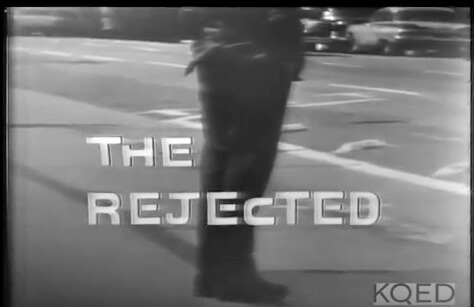
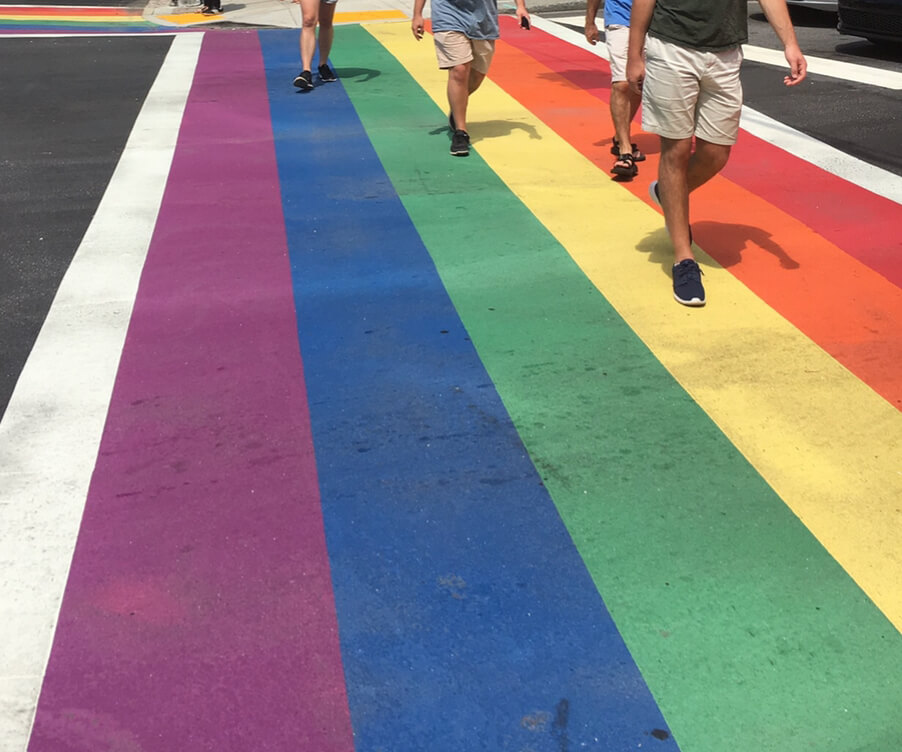
Top, Opening title sequence from television documentary “The Rejected.” Originally aired by KQED, San Francisco, California, September 11, 1961. Screenshot courtesy of Eric Solomon. Bottom, Rainbow crosswalks, corner of 10th Street and Piedmont Avenue, Atlanta, Georgia, June 2017. Photograph by Eric Solomon. Courtesy of Eric Solomon.
Southern Spaces, a peer-reviewed, multimedia, open access journal, invites scholars, critics, writers, artists, and activists to submit essays, photo essays, original documentaries, and digital projects for a new series: “Queer Intersections / Southern Spaces.”
In a 2013 short manifesto, “Stomp for the Shadows,” filmmaker Pratibha Parmar defines the word QUEER via an acronym: Queer, Unspoken, Embolden, Erased, Reclaimed.1Pratibha Parmar, “Stomp for the Shadows,” GLQ 19, no. 4 (2013): 567. In Parmar’s radical formulation of the category “queer,” the term becomes less a concrete noun denoting states of being, in which gathered under the umbrella of “queer” are LGBTQ+, and more a verb of doing: speaking or not speaking, emboldening or not emboldening, erasing or making visible, reclaiming or failing to claim, and finally queering or not queering. In this way, to queer is to exist as subjects in the transitive space of choice between doing and not doing. The question shifts from identifying queer subjects as intelligible, fixed beings to asking the critical questions: Toqueer what? Where?When?What do, or should, we queer and why?
With the series “Queer Intersections / Southern Spaces,” Southern Spaces welcomes submissions from scholars, activists, and artists who stand in this intersectional space and raise these critical questions. Southern Spaces asks contributors to consider what ways of being and doing (real and imagined) exist at the intersections of LGBTQ+ identity within locations across southern spaces and the Global South. We invite contributions from writers and creators of any orientation whose work addresses the lives of LGBTQ+ persons and/or applies queer and feminist theory to various topics. We encourage a diversity of methods and theoretical approaches.
All submissions must be original work. Although we expect submissions to consider space, place, and LGBTQ+ subjects critically in relation to the series, the list of possible topics to consider includes (but is not limited to):
Spaces and Identities
Intersectionality, hybridity, identity: race, gender, sexuality, ethnicity, regional identity, and class
Migration narratives, globalization, queer diaspora, and spaces of sexuality
Public and private spheres and the development of queer subcultures
Urban/rural and digital: gentrification, shifts in LGBTQ+ enclaves, and the importance of digital apps/dating in queer space and practice
Lesbian, Transgender, and Bisexual southern experiences
Gender identity and performance
Canons and Questions
Histories of sexuality in critical and popular thought
Identity politics in site-specific contexts
Pedagogy and the academy’s responsibility to LGBTQ+ subjects
Queer theory and feminist theory (pasts, presents, futures)
Reconsidering the queer theory canon (Foucault, Butler, Sedgwick, and other foundational theorists)
Social Justice and Public Policy
Violence, vulnerability, and precarity, perhaps with a particular emphasis on Trans women of color in southern spaces
Hate crimes and legal protections
Incarceration, institutionalization, and sexual violence
Pulse and its aftermath
Employment, discrimination, and the law
Movement reflections: after “Don’t ask, don’t tell” (DADT), after marriage legalization, etc., what next?
Health, Affect, Memory
Biopolitics and public health
HIV/AIDS, seropositivity, stigma, PreP and TasP
Disability
Safer sex, sex positivity, and radicalism
Intimacy, love, and affect
Memory, loss, mourning, and memorial practices
Queer Activism
Development, evolution, and futures of gay rights movements
Resistance and queer counter-narratives
Queer(ing) ethics and morality
Faith, religion, and spirituality
Media and Genre Analyses
Film and video (Queer Cinema)
Literary studies
Art, visual rhetoric, and representation
Archives: reclamations and erasures
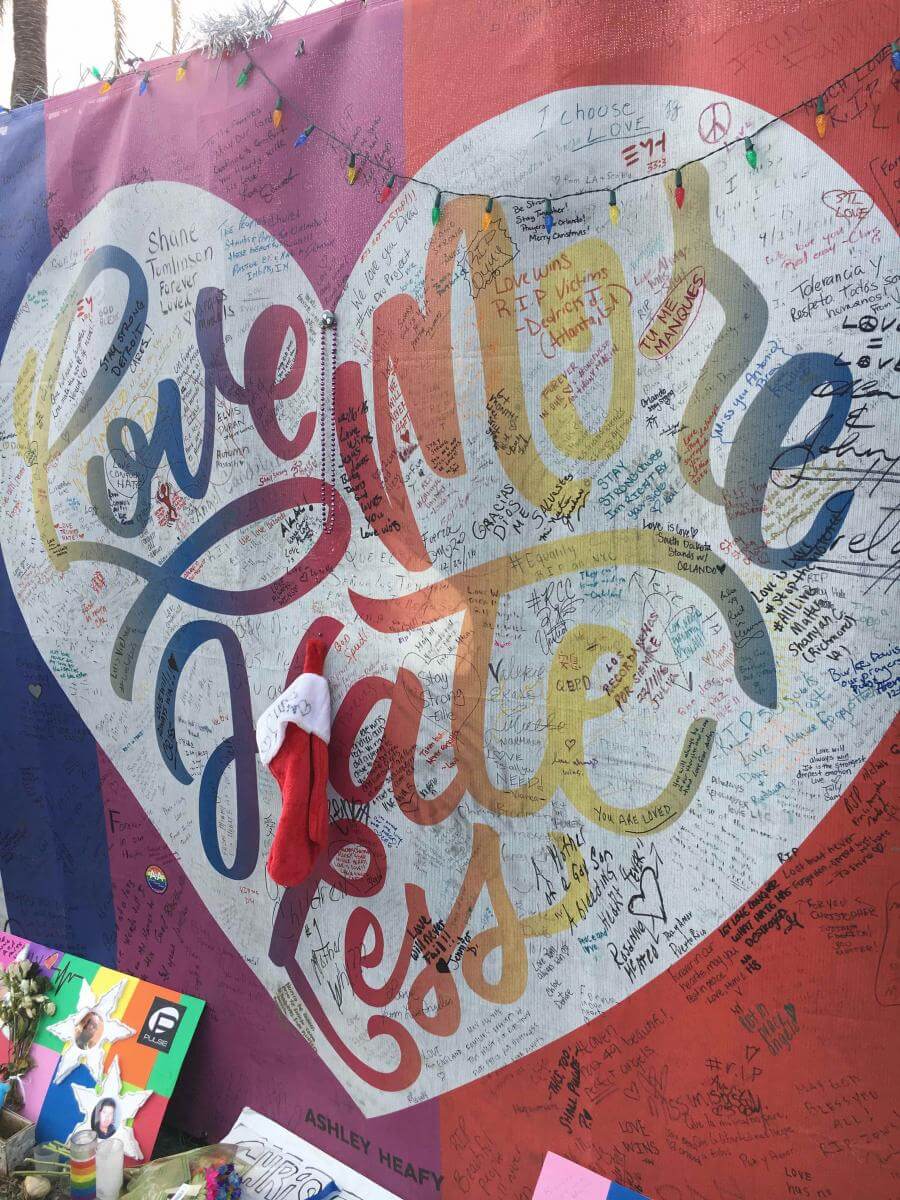
Love More, Hate Less, Pulse memorial site, Orlando, Florida, December 29, 2016. Photograph by Eric Solomon. Courtesy of Eric Solomon.
Examples
The following pieces and our “Queer Souths” educational resource provide examples of the critical, interdisciplinary, and multimedia engagement with LGBTQ+ subjects that this series seeks to expand:
Chesnut, Saralyn, Amanda C. Gable, and Elizabeth Rose Anderson. “Atlanta’s Charis Books and More: Histories of a Feminist Space.” Southern Spaces, November 3, 2009. https://ssredesign.ecdsdev.org/2009/atlantas-charis-books-and-more-histories-feminist-space.
This is an ongoing series. Please submit proposals (350–500 words) or full projects to series editor Eric Solomon (seditor@emory.edu). There is no submission fee or article processing charge. Visit our submissions page for more information.