Poem
Elegy for the Native Guards
Now that the salt of their blood
Stiffens the saltier oblivion of the sea . . .
—Allen Tate
We leave Gulfport at noon; gulls overhead
trailing the boat—streamers, noisy fanfare—
all the way to Ship Island. What we see
first is the fort, its roof of grass a lee—
half reminder of the men who served there—
a weathered monument to some of the dead.
Inside we follow the ranger, hurried
though we are to get to the beach. He tells
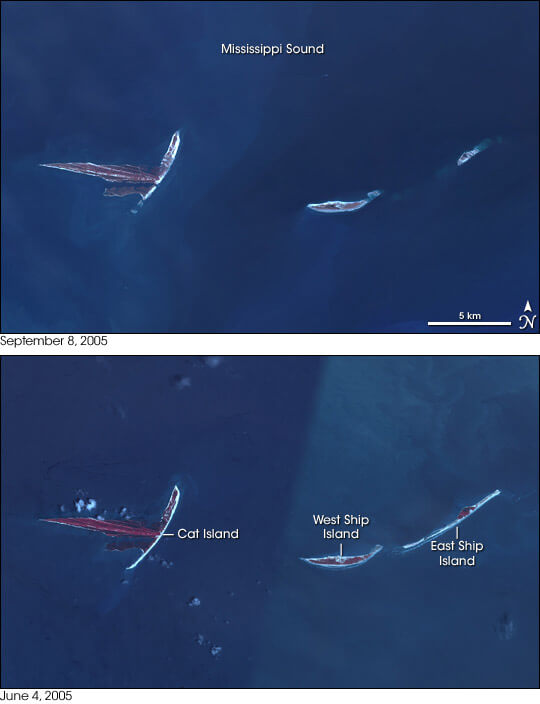
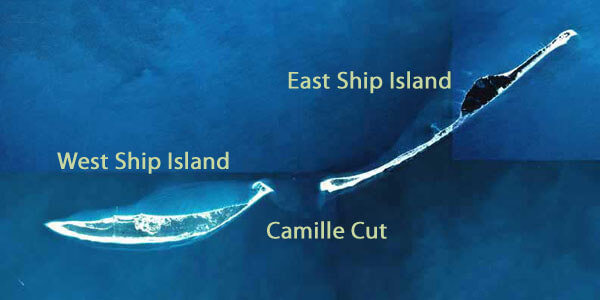
of graves lost in the Gulf, the island split
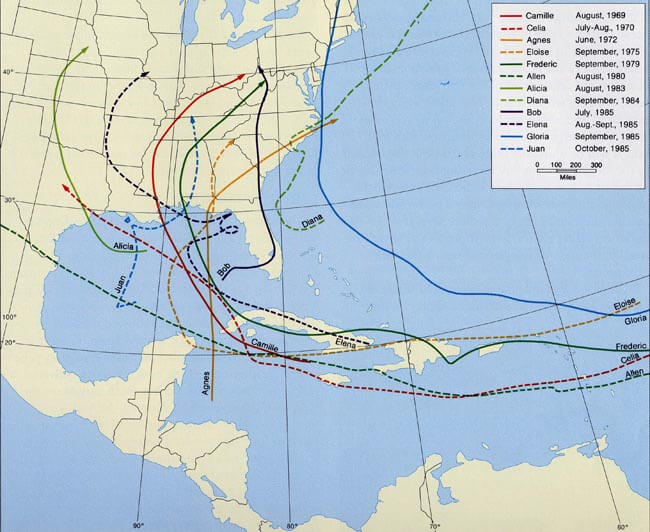
in half when Hurricane Camille hit,
shows us casemates, cannons, the store that sells
souvenirs, tokens of history long buried.
The Daughters of the Confederacy
has placed a plaque here, at the fort’s entrance—
each Confederate soldier’s name raised hard
in bronze; no names carved for the Native Guards—
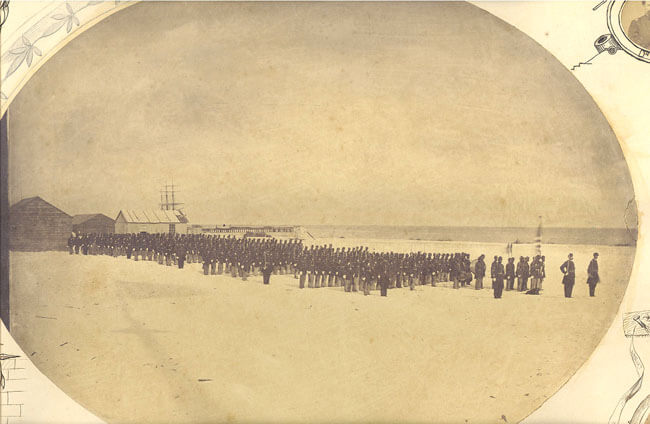
2nd regiment, Union men, black phalanx.
What is monument to their legacy?
All the grave markers, all the crude headstones—
water—lost. Now fish dart among their bones,
and we listen for what the waves intone.
Only the fort remains, near forty feet high
round, unfinished, half-open to the sky,
the elements—wind, rain—God’s deliberate eye.
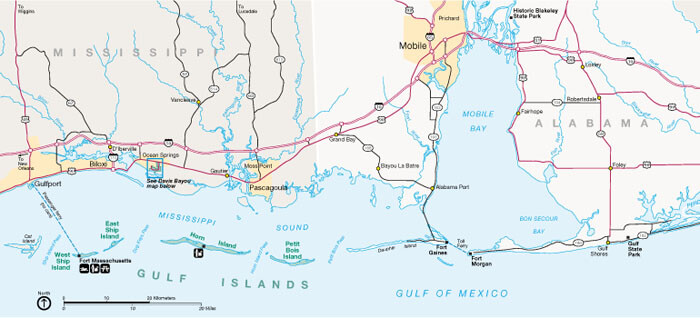
Map
|
|
Cover Image Attribution
The upper ramparts of Fort Massachusetts, July 27, 2012. Photography by Flickr user Roger Smith. Creative Commons license CC BY-NC-ND 2.0.
Recommended Resources
Maps and Images
Web Sources
Bearss, Edwin C. Historic Resource Study: Ship Island Harrison County, Mississippi Gulf Islands National Seashore, Florida/Mississippi. (Denver, CO: United States Department of the Interior, 1984). http://www.topsfieldhistory.org/images/todd/Ship_Island_Research_Study.pdf.
“Gulf Islands: Fort Massachusetts.” National Park Service. Accessed March 12, 2021. https://www.nps.gov/guis/learn/historyculture/fort-massachusetts.htm.
Handler, Jerome S. and Michael L. Tuite, Jr. “Retouching History: The Modern Falsification of a Civil War Photograph.” UVA Public People Search. University of Virginia. Accessed March 12, 2021.” http://people.virginia.edu/~jh3v/retouchinghistory/essay.html#1.
“Second Louisiana Native Guard: Gulf Island Seashore.” National Park Service. Accessed March 12, 2021. https://www.nps.gov/articles/2la-guard.htm.
Print Sources
Hollandsworth, James G. The Louisiana Native Guards: The Black Military Experience During the Civil War. Baton Rouge: Louisiana State University Press, 1995.
Ochs, Stephen J. A Black Patriot and a White Priest: André Cailloux and Claude Paschal Maistre in Civil War New Orleans. Baton Rouge: Louisiana State University Press, 2000.
Weaver, C. P. Thank God My Regiment’s an African One: The Civil War Diary of Nathan W. Daniels. Baton Rouge: Louisiana State University Press, 2000.